PLA vs PETG vs ASA: which filament for functional parts?
Most filament comparisons rank materials by strength. For a functional part, strength is rarely the question. The question is where the part will live: on a desk, in a car, or on the south side of the house.
Short answer
Use PLA for indoor parts that stay below about 55–60 °C: it is the easiest to print and the stiffest of the three. Use PETG for tougher parts, warm rooms, damp places and most outdoor shade; it softens around 75–80 °C and bonds its layers better than PLA. Use ASA for parts in direct sun or hot cars; it resists UV and heat to about 93–95 °C, but it warps and needs an enclosure and good ventilation.
A PLA phone mount that spent an afternoon on a dashboard in July comes back looking like a Dalí clock. The plastic didn’t fail a strength test. It failed a temperature test that nobody thought to run, and that is the usual story with functional parts: the material gets chosen for the wrong reason.
So this guide compares PLA, PETG and ASA by the things that decide whether a part survives: heat, sun, toughness, and how much trouble each one is to print.
The three at a glance
| PLA | PETG | ASA | |
|---|---|---|---|
| Softens around | 55–60 °C | 75–80 °C | 93–95 °C |
| Sunlight (UV) | Degrades | Fair; fine in shade | Good; made for outdoors |
| Stiffness | Highest | Lower; flexes before breaking | Medium |
| Toughness (impact) | Brittle; shatters | Tough | Tough |
| Layer bonding | Fair | Very good | Good |
| Printing difficulty | Easy | Easy, strings more | Hard: warps, needs an enclosure |
| Fumes | Low | Low | Needs ventilation |
| Cost estimate per kg | $20 | $22 | $28 |
PLA: the default for a reason
PLA prints at low temperature, barely warps, bridges well and holds sharp detail. It is also the stiffest of the three, which makes it good for brackets, jigs, enclosures and anything that must hold its shape under a light load.
Its weaknesses are specific, and easy to design around once you know them:
- Heat. It softens from about 55–60 °C. A sunny windowsill, a car interior or a spot above a radiator can get there.
- Brittleness. It breaks suddenly instead of bending, which matters for clips, snap fits and anything that gets dropped. The snap-fit guide shows how to design for it.
- Creep. Under a constant load, PLA slowly sags, faster when warm.
- UV. Sunlight degrades it over months.
Indoors, at room temperature, PLA is the right answer more often than people expect. Most of Loftsmith’s free generators default to it for that reason.
PETG: tougher and warmer
PETG is the one to reach for when PLA’s weaknesses matter. It survives heat to about 75–80 °C, bends before it breaks, and bonds its layers better than PLA, so parts are less likely to split along a layer line. It shrugs off water, which makes it good for bathrooms, planters and garden parts.
It asks for a few adjustments:
- Stringing. PETG oozes more. Tune retraction and travel, and expect a few whiskers.
- Too much bed adhesion. On a smooth PEI sheet it can bond so well that it tears the surface. Use a textured sheet, or a layer of glue stick as a release agent.
- Slightly bigger clearances. PETG tends to bulge a little more than PLA, so fits and hinges often need about 0.05 mm more gap. The tolerance guide shows how to find the number.
For most functional parts that live anywhere other than a desk, PETG is the best default: nearly as easy as PLA, with far fewer ways to fail.
ASA: for the sun
ASA is ABS’s outdoor cousin. It holds its shape to about 93–95 °C, resists UV well, and keeps its colour in the sun. Car parts, garden fixtures, antenna mounts, anything bolted to the outside of a house: that is ASA’s job.
The price is paid at the printer:
- Warping. ASA shrinks as it cools, so large parts lift at the corners. It needs a hot bed and, for anything bigger than a hand, an enclosure.
- Fumes. It releases fumes while printing. Keep the printer in a ventilated room, but out of drafts, which cause warping.
- Design for shrink. Rounded corners, a brim, and avoiding large flat slabs all help.
Choose by where it lives
| Where the part lives | Pick | Why |
|---|---|---|
| Desk, shelf, workshop, indoor fixture | PLA | Stiff, precise, easiest to print |
| Clips, snap fits, parts that get dropped | PETG | Bends instead of breaking |
| Bathroom, kitchen, garden shade, garage | PETG | Handles water and moderate heat |
| Car interior, direct sun, near a heat source | ASA | Heat to about 95 °C, UV-stable |
| Outdoor fixture that must last years | ASA | UV and weather resistance |
If a part carries load, check the load separately. Material choice sets the limits, but the shape decides whether you get anywhere near them. The weight guide has the arithmetic.
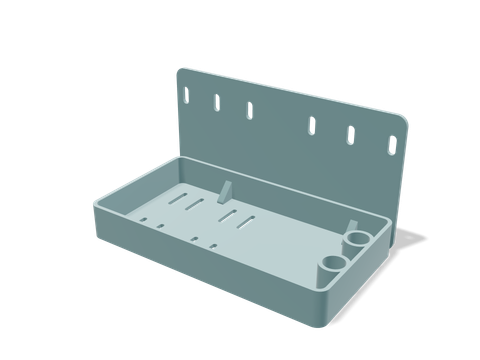 Measured-fit shower caddyA shower caddy that hangs on hooks in a wet, warm room: a job for PETG.190 × 117 × 108 mm · 167 g · 3 h 51 min
When none of the three fits
- TPU when the part must flex: bumpers, gaskets, feet, phone cases. Print slowly and avoid long bridges.
- Nylon for gears, bushings and parts that slide or wear. It is tough and slippery, but must be kept dry. See the gear guide.
- Carbon-fibre filled nylon or PP for stiff, heat-resistant structural parts. It needs a hardened nozzle and dry filament.
In Loftsmith, choose the filament in the “Designing for” line before you describe the part. The strength checks and the weight and cost estimates use it, and the design is checked against that material instead of a generic plastic.
Questions people ask
Is PETG stronger than PLA?
Tougher, not stronger. PLA is stiffer and usually has higher short-term strength in a lab test, but it is brittle and shatters. PETG bends before it breaks, bonds its layers better and survives more heat, which makes it the stronger choice for most real functional parts.
Can PLA be used outdoors?
Only briefly. PLA softens around 55–60 °C, which a dark part in summer sun can reach, and it degrades under UV light. For outdoor parts, use PETG in shade or ASA in direct sun.
Is ASA better than PETG for outdoor use?
In direct sun, yes: ASA resists UV and heat to about 93–95 °C and keeps its colour. PETG is fine in shade and damp places and is much easier to print, since it doesn’t need an enclosure.
Which filament is easiest to print?
PLA, by a wide margin. PETG is close behind but strings more and sticks too well to smooth PEI. ASA warps without an enclosure and gives off fumes, so it needs ventilation.
Sources and method
The numbers come from Loftsmith’s CAD engine, which uses them to design and check every part it builds, and from the manufacturer and reference sources below. Every figure is checked against those sources and the engine’s own geometry. Found a mistake? Email [email protected] and we’ll fix it.